ications. By starting only at the official website, you significantly reduce the risk of compromising your funds during setup.
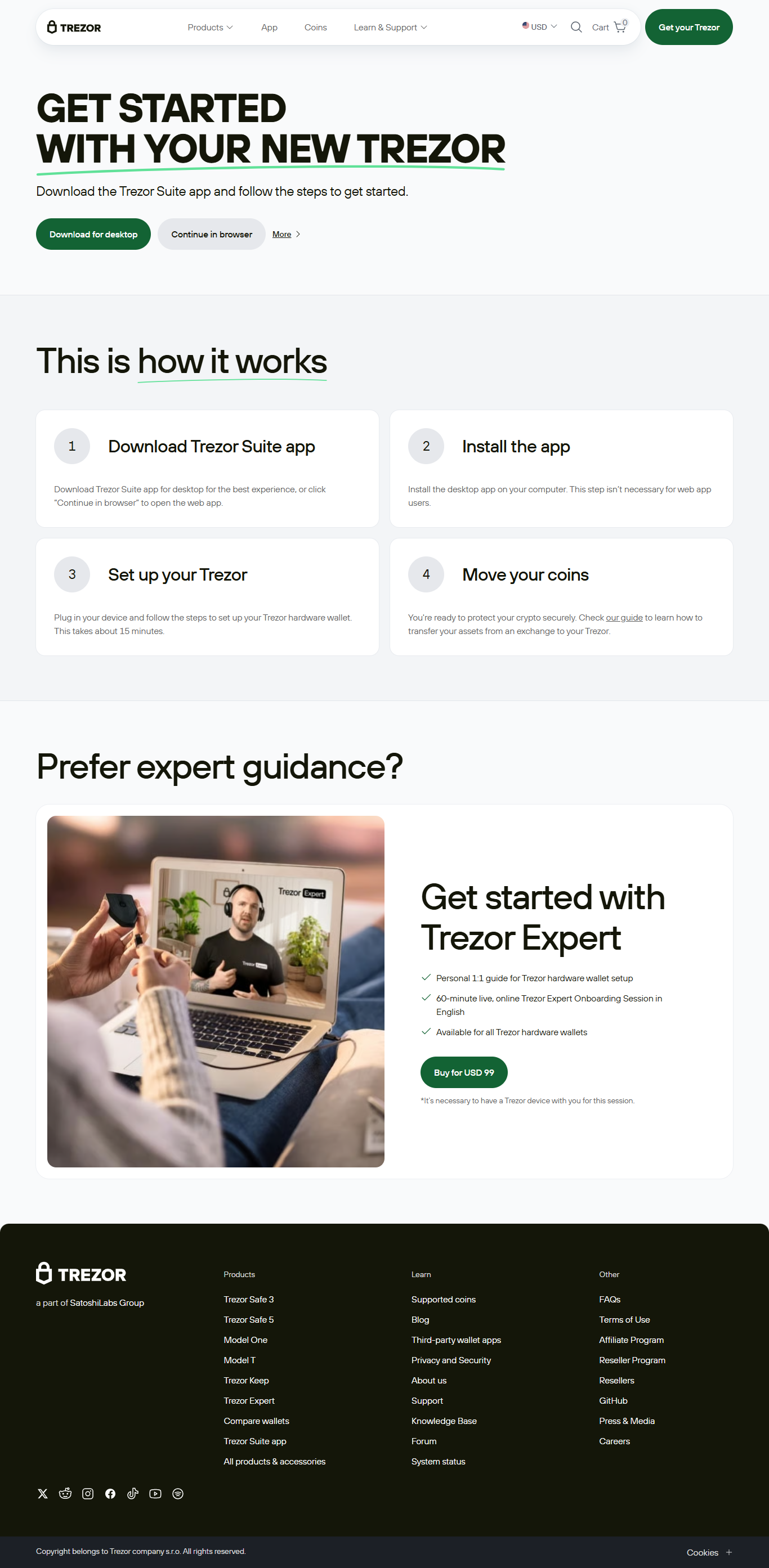
The page guides you through installing Trezor Suite, connecting your device, updating firmware, and creating or restoring a wallet. Each step is explained in simple language, making the process accessible even for beginners.
Why Choose a Trezor Hardware Wallet?
Trezor hardware wallets are designed to keep your private keys offline at all times. Unlike software wallets or exchanges, where keys may be exposed to malware or third-party risks, Trezor gives you complete control. Your private keys never leave the device, and all sensitive operations must be physically confirmed.
Key benefits include:
Offline storage of private keys
Open-source firmware and software
Protection against malware and phishing attacks
Support for thousands of cryptocurrencies
Transparent security model with user verification
Getting Started: Step-by-Step Setup
1. Visit Trézor.io/Start
Begin by opening your browser and navigating directly to Trézor.io/Start. Always double-check the URL to ensure you are on the official Trezor website. Avoid clicking links from emails, ads, or third-party sources.
2. Choose Your Trezor Model
On the Start page, select your specific Trezor device. This ensures you receive the correct instructions, firmware, and connection steps tailored to your model.
3. Install Trezor Suite
You will be prompted to download Trezor Suite, the official desktop and web application for managing your wallet. Trezor Suite allows you to:
View balances and portfolio performance
Send and receive cryptocurrencies
Manage multiple accounts
Adjust security and privacy settings
For maximum security, Trezor recommends using the desktop version rather than the web app.
4. Connect Your Device
Once Trezor Suite is installed, connect your hardware wallet to your computer using the supplied USB cable. Follow the on-screen instructions to verify the connection and confirm that the device is genuine.
5. Install or Update Firmware
New Trezor devices are shipped without firmware or with a minimal version installed. Trézor.io/Start will guide you through installing the latest official firmware. This step is essential, as firmware updates often include important security improvements.
You will confirm the firmware installation directly on the device screen, ensuring that no unauthorized software is installed.
Creating a New Wallet
After firmware installation, you can create a new wallet. During this process, Trezor will generate a recovery seed, typically consisting of 12, 18, or 24 words.
Recovery Seed: Your Most Important Backup
The recovery seed is the only way to restore your wallet if your device is lost, stolen, or damaged. Trezor will display these words on the device screen only—never on your computer.
Important best practices:
Write the words down on paper (never digitally)
Store the seed offline in a secure location
Never share your recovery seed with anyone
Do not take photos or screenshots
Anyone with access to your recovery seed can control your funds, so protecting it is critical.
Setting a PIN and Additional Security
You will also be asked to create a PIN code for your Trezor device. This PIN protects your wallet from unauthorized physical access. After multiple incorrect attempts, the device enforces time delays, making brute-force attacks impractical.
Advanced users can further enhance security by enabling:
Passphrase protection for an extra layer beyond the recovery seed
Hidden wallets derived from different passphrases
Tor integration within Trezor Suite for improved privacy
Restoring an Existing Wallet
If you already have a Trezor wallet or recovery seed, Trézor.io/Start also supports wallet restoration. Simply choose the “Restore wallet” option and carefully enter your recovery seed using the device’s secure input method.
This process ensures your private keys are recreated offline without exposure to your computer or the internet.
Supported Cryptocurrencies
Trezor hardware wallets support thousands of cryptocurrencies, including Bitcoin (BTC), Ethereum (ETH), Litecoin (LTC), and many ERC‑20 tokens. Through Trezor Suite, users can manage multiple assets in one interface while keeping keys safely offline.
Support continues to expand through firmware and software updates, reflecting Trezor’s commitment to long-term usability.
Best Practices for Long-Term Safety
Starting your device correctly is only the beginning. To maintain security over time:
Keep Trezor firmware and Trezor Suite up to date
Verify addresses on the device screen before confirming transactions
Beware of phishing sites and fake support messages
Never enter your recovery seed on any website or computer
Conclusion
Trézor.io/Start is the safest and most reliable way to begin using your Trezor® hardware wallet. By following the official setup process, you ensure that your device is genuine, your software is authentic, and your private keys remain fully under your control.
With its focus on transparency, open-source security, and user empowerment, Trezor continues to set the standard for self-custody in the cryptocurrency ecosystem. Starting at Trézor.io/Start is not just a setup step—it is the foundation of long-term digital asset security.